
The truck has left your site, arrived at the receiving facility, and the waste has been unloaded from the IBCs, drums, or other packaging it travelled in.
The next step is the receiving process, where the facility checks what has actually arrived against the information provided when the collection was booked.
For trackable waste in NSW, this is also part of the compliance trail. If the waste doesn’t match the transport documentation, the discrepancy must be recorded and the facility needs to determine what has actually been received before deciding how the load can be managed.
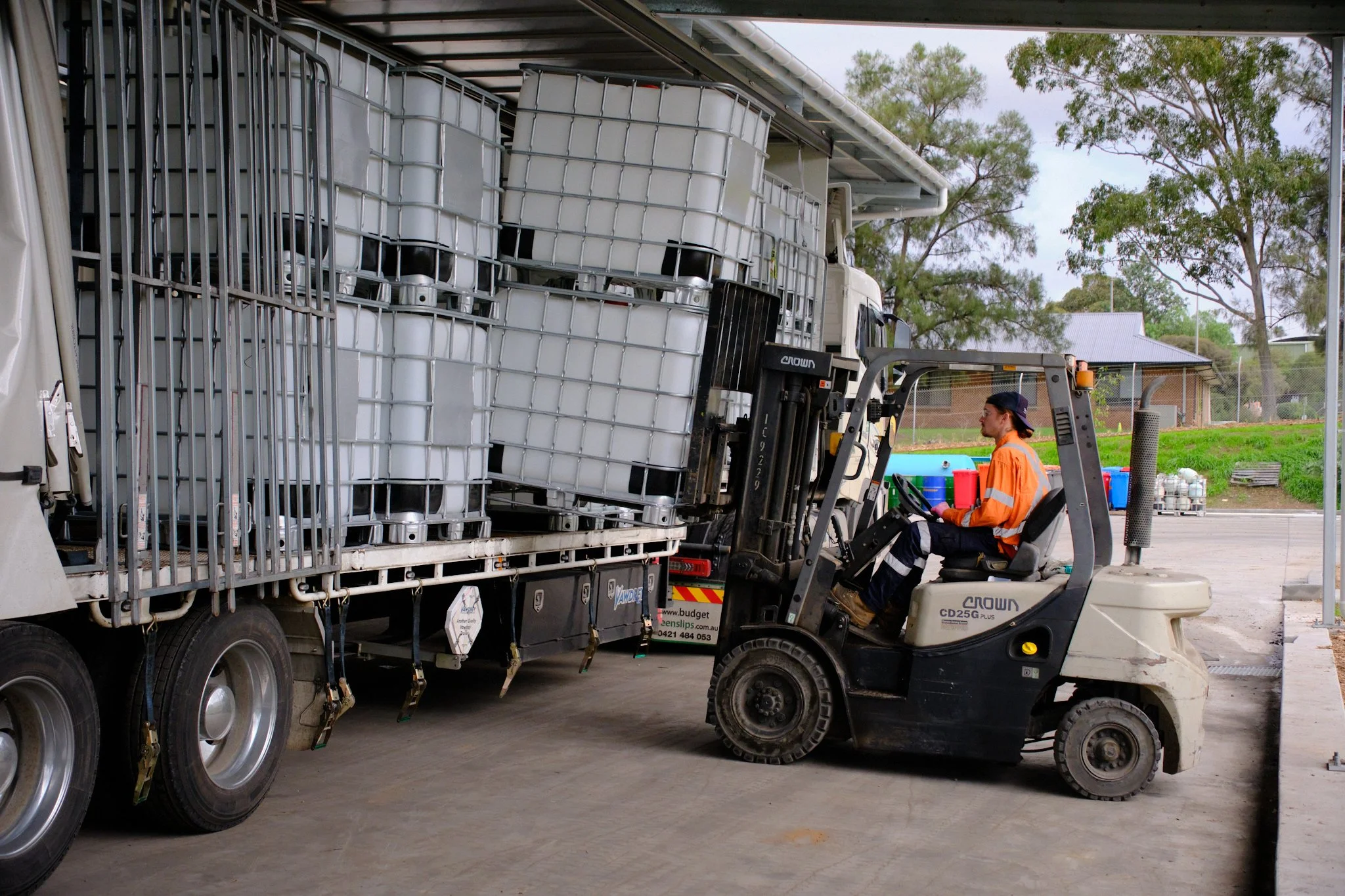
First, the waste is weighed
As soon as the truck is unloaded, we assess all incoming waste pallet by pallet or item by item on the scales.
The recorded weight is checked against the information supplied for the collection and what would reasonably be expected for the material described.
If the figures don’t line up, that’s a strong indication that we need to take a closer look.
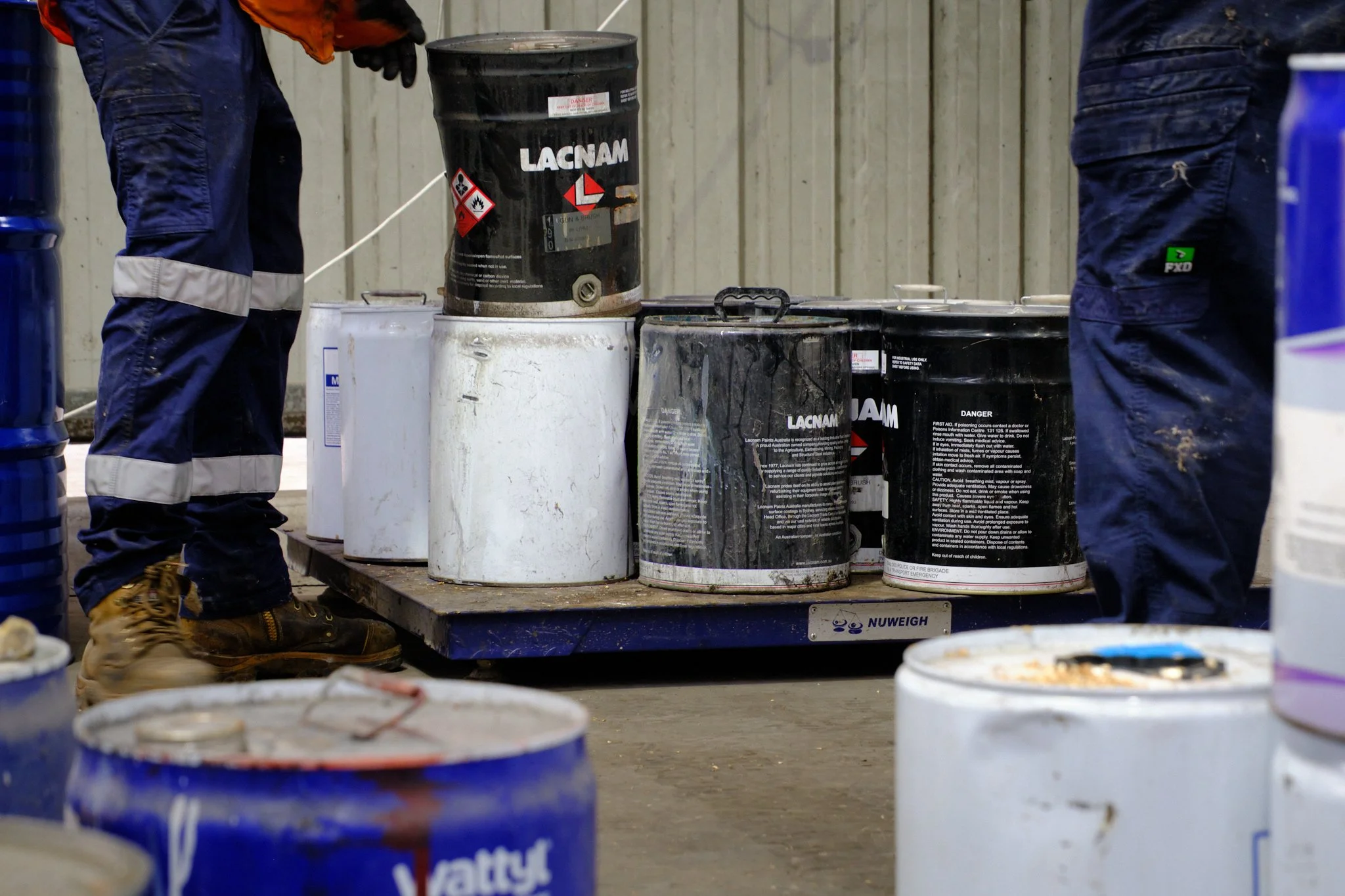
Hazardous waste being weighed after arriving at CleanEra
Additional assessment where needed
Where the waste matches the available information, no extra investigation may be required.
Where there is uncertainty, we carry out additional assessment. That might mean checking physical characteristics, confirming chemical composition, or arranging targeted analysis where a contaminant or concentration needs to be established.
The aim is to answer the specific questions that affect how the waste can be managed, rather than ordering testing by default.
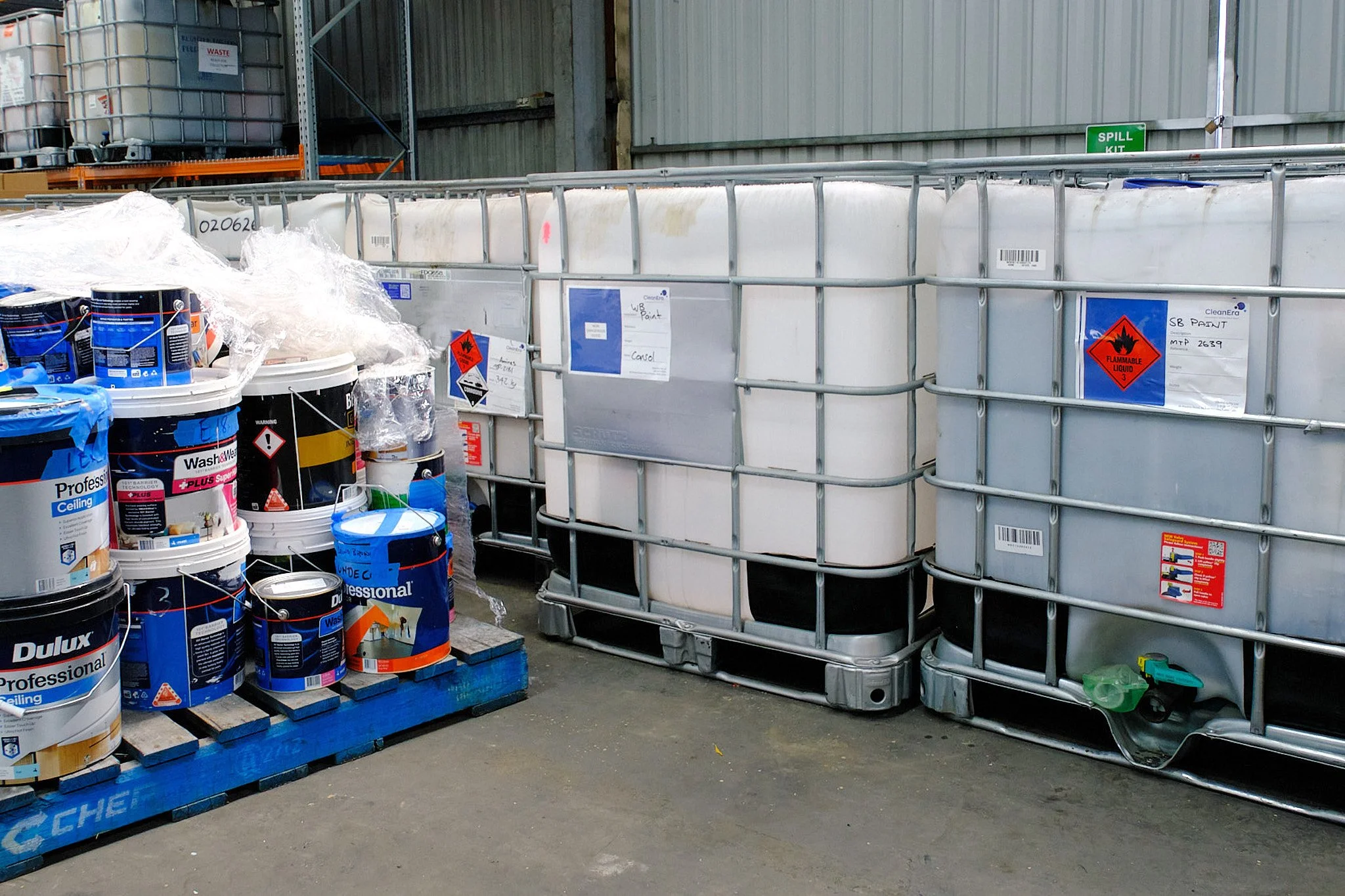
Paint ready to be sorted for different treatment pathways
Packaged waste may need to be sorted
Waste that is all the same product may not need sorting. For example, an intact pallet of out-of-date stock from the same batch can often stay together if the packaging is sound and the product is clearly identified.
Mixed waste is different.
Paint is a common example. From the customer’s point of view, “paint” may be a perfectly reasonable description. But receiving facility, water-based paint is very different from solvent-based paint, which is different again from hardeners, thinners, and other related products.
Our operators separate the load into the categories needed to manage each material appropriately.
Then the waste moves into treatment or disposal
Once the material has been received, assessed and sorted where necessary, what happens next depends on the waste stream.
For example, a workshop clean-out might arrive as one collection but contain waste oil, oily water, solvents, paint waste, and contaminated absorbents. Once received, those materials may need to be separated into different waste streams and follow different treatment or disposal pathways.
If you are arranging a hazardous-waste collection and want to understand what happens after pickup, we can talk you through the receiving and treatment process before the waste leaves your site.
